Gallbladder Diseases & Gallstones Treatment in Kompally
Gallbladder diseases such as gallstones and gallbladder inflammation can cause severe abdominal pain, indigestion and complications. At Sree Nandaka Advanced Surgery Hospital, Kompally, we provide expert diagnosis and advanced laparoscopic gallbladder surgery for safe and quick recovery.
What Are Gallbladder Diseases?
Gallbladder diseases include conditions that affect the gallbladder and bile ducts, most commonly gallstones (cholelithiasis). These stones can block bile flow and lead to pain, infection and digestive problems.
Common Symptoms
- Upper right abdominal pain
- Pain after eating oily or fatty foods
- Nausea and vomiting
- Bloating and indigestion
- Fever or jaundice in severe cases
Gallstones & Gallbladder Treatment Options
Treatment depends on symptoms and severity. The most effective solution for painful gallstones is laparoscopic cholecystectomy, a minimally invasive surgery to remove the gallbladder.
- Small incisions & less pain
- Short hospital stay
- Faster recovery
Why Choose Sree Nandaka?
- Experienced laparoscopic surgeons
- Advanced operation theatre & safety standards
- Personalised patient care
- Trusted gallbladder specialist in Kompally

Dr. Praveen Koduru
MBBS, MS General Surgery, FIAGES, FIACP
Advanced Laparoscopic & Laser Surgeon
Specialist in Anal Fissure, Piles & Fistula Treatment
Sree Nandaka Advanced Surgery Hospital, Hyderabad
Last Updated: May 2026
Consult a Gallbladder Specialist Today
Don’t ignore recurring abdominal pain or gallstone symptoms. Get expert treatment at Sree Nandaka Advanced Surgery Hospital, Kompally.
Call Now: 9000861000Gallbladder Diseases Treatment in Hyderabad
Gallbladder diseases include gallstones, gallbladder inflammation (cholecystitis), infections, bile duct blockages, and gallbladder polyps. These conditions commonly cause right-side abdominal pain, nausea, vomiting, bloating, indigestion, and fever. Early diagnosis is important to avoid complications and long-term discomfort. At Sreenandaka Advanced Surgery, we provide advanced diagnostic evaluation and expert gallbladder disease treatment in Hyderabad, including minimally invasive laparoscopic gallbladder surgery that ensures reduced pain, faster recovery, and safe outcomes.
Frequently Asked Questions
1. What happens if gallbladder disease is left untreated?
When left untreated, gallbladder disease can progress and affect other organs such as the bile ducts, liver, or pancreas. Gallstones may move into the bile or pancreatic ducts, causing infection, inflammation, or blockage. Over time, this can lead to scarring and narrowing of the bile ducts, prolonged bile obstruction, and serious conditions like liver cirrhosis, which may further impact other organs.
2. Who is at high risk of gallbladder disease?
People who consume a high-calorie diet, are overweight or obese, have diabetes, are above 60 years of age, assigned female at birth, or have conditions such as Crohn’s disease, sickle-cell disease, or liver cirrhosis are at higher risk. Individuals with a family history of gallbladder disease, those on long-term intravenous nutrition, or taking cholesterol-lowering medications also have increased risk.
3. Are gallbladder diseases preventable?
Some gallbladder diseases can be prevented by managing risk factors. Maintaining a healthy, fibre-rich diet, avoiding excessive fatty foods, staying physically active, and following a balanced lifestyle can help improve gallbladder health and reduce the risk of disease.
.
Frequently Asked Questions About Gallbladder Disease
What is the gallbladder?
The gallbladder is a small pear-shaped organ located beneath the liver. It stores bile produced by the liver and releases it into the small intestine to help digest fats.
What are gallbladder diseases?
Gallbladder diseases include gallstones (cholelithiasis), gallbladder inflammation (cholecystitis), gallbladder infection, polyps, and bile duct blockage. Gallstones are the most common cause.
What are the common symptoms of gallbladder problems?
Symptoms of gallbladder disease include pain in the upper right abdomen, pain after eating fatty foods, nausea, vomiting, bloating, indigestion, fever, and sometimes yellowing of the eyes or skin (jaundice).
What causes gallstones?
Gallstones form when bile contains excess cholesterol or bilirubin or when the gallbladder does not empty completely. Risk factors include obesity, pregnancy, diabetes, rapid weight loss, and family history.
How are gallbladder problems diagnosed?
Gallbladder disease is diagnosed using ultrasound, blood tests, CT scan, MRI, or HIDA scan to assess gallbladder function and detect stones or infection.
What is the treatment for gallbladder disease?
Treatment depends on severity. Mild symptoms may be managed with medications and diet changes, while recurrent gallstones or infection usually require surgical removal of the gallbladder.
What is gallbladder removal surgery?
Gallbladder removal surgery, known as cholecystectomy, involves removing the gallbladder. It is commonly performed using laparoscopic (keyhole) surgery, allowing faster recovery and minimal scarring.
Is life normal after gallbladder removal?
Yes, most people live a normal life without a gallbladder. Bile flows directly from the liver to the intestine, and patients can return to regular activities after recovery with minor dietary adjustments initially.
What happens if gallbladder disease is left untreated?
Untreated gallbladder disease can lead to serious complications such as gallbladder infection, rupture, pancreatitis, bile duct blockage, and severe abdominal infection.
How can gallbladder problems be prevented?
Gallbladder problems can be reduced by maintaining a healthy weight, eating a balanced low-fat diet, exercising regularly, staying hydrated, and avoiding rapid weight loss.
Gall Stone Treatment in Hyderabad
What is Gallbladder Disease?

Gallbladder disease refers to infection, inflammation, stones, or obstructions of the gallbladder. In simple terms, it is any issue affecting the gallbladder functioning. The gallbladder is a pear-shaped sac situated just under the liver. Its function is to store bile juice made by the liver and release it to the small intestine via bile ducts to aid in the digestion of fatty food.
Gallbladder disease can either be in the gallbladder itself or the bile ducts connected to it. As the gallbladder is a part of the digestive system, a gallbladder disease can even affect other organs, shares Gallbladder Specialist in Hyderabad at Sree Nandaka Advanced Surgery Hospital.
Types of Gallbladder Disease
Some conditions that can affect the gallbladder and are known as gallbladder diseases include:
-
Cholelithiasis (gallstones)- It is the most common gallbladder disease that may develop in the gallbladder itself or the bile ducts. The gallstones are formed when bile stored in the gallbladder gets hardened. They can be caused by the presence of high levels of cholesterol, bilirubin (bile pigment), or bile salts.
Gallstones can be present without showing any symptoms. They become a serious problem if they become large or cause blockage of the bile flow in the gallbladder or bile ducts. That’s when the symptoms begin to appear. Some of the common symptoms are intense, steady pain in the upper right part of the abdomen that lasts for long; pain in the backside between the shoulder blades; fever; chills; nausea; vomiting; jaundice; abdominal bloating; belching; indigestion; and fatty foods intolerance.
-
Cholecystitis (gallbladder inflammation)- This gallbladder disease indicates an infection or blockage of the gallbladder either a functional obstruction or rarely a cancer. Chronic cholecystitis has complications like scarring of the gallbladder tissue and ultimately gangrene and even tearing.
-
Biliary dyskinesia (functional gallbladder disorder)- It is a motility issue, meaning a muscle or nerve issue that leads to problems in passing out of the bile juice from the gallbladder into the bile ducts. This acalculous gallbladder disease can cause the bile to back up in the gallbladder and result in its chronic inflammation.
-
Gangrene (abscesses)- It is a serious complication of chronic inflammation of the gallbladder wherein the gallbladder has sustained swelling and distension. Eventually, it causes the death of gallbladder tissues that are further at risk of getting torn or burst.
-
Gallbladder cancer- It is a rare but serious gallbladder disease, often appearing in its later stages. In the initial stage, gallbladder polyps (growths or tumours) are harmless.
-
Cholangiopathy- It is the disease of the bile ducts, typically their inflammation which can cause an acute infection, obstruction, or a progressive autoimmune disorder called primary biliary cholangitis. The chronic inflammation of the bile ducts can lead to biliary stricture- the scarring and narrowing of the bile ducts. It causes reverse flow of bile into the gallbladder and liver.
Gall bladder is an important body organ and if one is suffering from upper abdominal pain and diagnosed with gallbladder diseases they must consult the best gallbladder doctor in Hyderabad at Sree Nandaka Advanced Surgery Hospital.
Diagnosis of Gallbladder Disease
Gallbladder specialist doctor in Hyderabad starts diagnosis by noting the patient’s symptoms and reviewing the patient’s medical history. Any changes in the vital signs such as blood pressure, internal body temperature, and heart rate are also observed. Next, the physician conducts a thorough physical examination to look for the signs of jaundice and abdominal swelling. If the abdominal area is felt in the site where the gallbladder is present, it is a sign of gallbladder inflammation. Upon touching the abdominal area, pain may be felt or not. This helps physicians distinguish between acute swelling caused by gallstones and chronic inflammation associated with gallbladder cancer. To confirm the diagnosis of gallbladder disease and to know the exact problem of the gallbladder, the patients are ordered for routine blood tests and medical imaging tests.
The tests used for diagnosis of gallbladder disease include:
- Complete Blood Count- The high WBC count indicates inflammation or infection of the gallbladder.
- Liver function tests- These are blood tests that help detect blockages in the bile ducts.
- Pancreas function tests- These are blood tests that check for blockages in the pancreatic ducts.
- Abdominal ultrasound- This test provides information on any blockages, inflammation, or growths in the gallbladder or bile ducts.
- HIDA scan- It helps measure the emptying of bile juice from the gallbladder into the small intestine and the bile flow through the bile ducts.
- Endoscopic Ultrasound (EUS)- This is a combination diagnostic procedure wherein an endoscope with ultrasound technology at its tip is inserted into the abdomen down through the throat. It provides endosonographic images of the inside of the abdomen to help the patient visualise and check for any abnormalities in the pancreas, bile ducts, gallbladder, and liver.
- Endoscopic Retrograde Cholangiopancreatography (ERCP)- This test combines X-ray technology with endoscopy. Here, fluoroscopic X-rays help visualise the bile ducts for any blockages.
Frequently Asked Questions
1. What happens if gallbladder disease is left untreated?
When left untreated, gallbladder disease can progress and affect other organs including bile ducts, liver, or pancreas. Gallstones that have passed into the bile ducts or pancreatic ducts can cause infection, inflammation, and/or blockage. They can lead to scarring and narrowing of the bile ducts or long-term damage of the pancreatic ducts, thereby leading to prolonged obstruction in the bile flow. The complication of gallbladder and/or bile duct problems that cause reverse flow of the bile juice is cirrhosis- the scarring of the liver. Cirrhosis can cause further complications in other organs.
2. Who is at high risk of gallbladder disease?
People who take high-calorie diet; are overweight or obese; are diabetics; aged above 60 years; assigned to be female; suffer from Crohn’s disease, sickle-cell disease, or liver cirrhosis; have a history of gallbladder disease; are fed intravenously for medical reasons; or taking cholesterol-lowering drugs are more likely to have gallbladder disease.
3. Are gallbladder diseases preventable?
Some gallbladder diseases can be avoided by managing or modifying their risk factors. Maintaining a healthy diet that includes more fibre-rich plant-based foods and a proper lifestyle including regular exercising can help optimise the health of the gallbladder.
To get more details and effective treatment for any type of gallbladder issues, book a visit with the Best Gallbladder Surgeon in Hyderabad at Sree Nandaka Advanced Surgery Hospital.

FAQ'S | Gallbladder Diseases | Gallbladder Removal Surgery | Dr.G.Uday Kiran

Gallbladder Disease Treatment | Gallbladder Issues | Gallbladder Specialist in Hyderabad
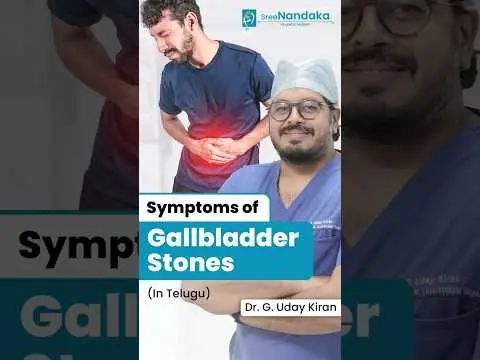
Gallbladder Stones | Symptoms of Gallbladder Stones | Dr. G. Uday Kiran |
Leave us a message and our team will get in touch with you.
Address:
Plot no 770, Jayabheri Park,
Behind BigBazar, Kompally,
Hyderabad, Telangana 500014, India.
Email ID
sreenandaka@gmail.com
Contact No.
+91-9000861000,
+91-9000835000